White-water kayak tour on the Soča River
White-water kayaking on the Soča River is an individual adventure, as you sit alone in the kayak and your own movements, decisions and reactions also shape how you move downstream. The biggest advantage of white-water kayaking is that it gives you a much more personal connection with the river than classic rafting. In the kayak, you move more independently and every movement matters: how you keep your direction, when you paddle, how you react to a wave, and how you use the natural momentum of the river.
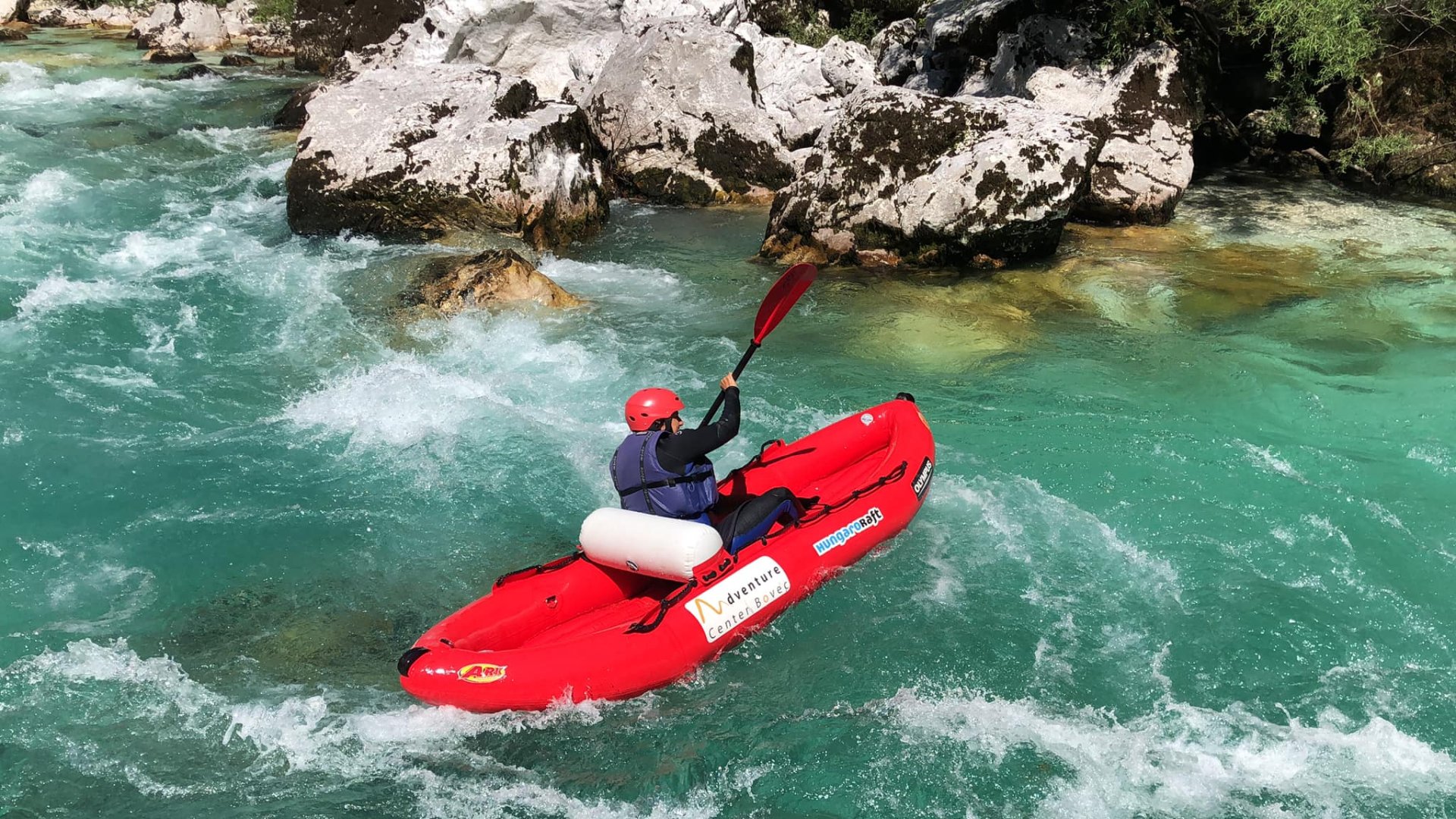
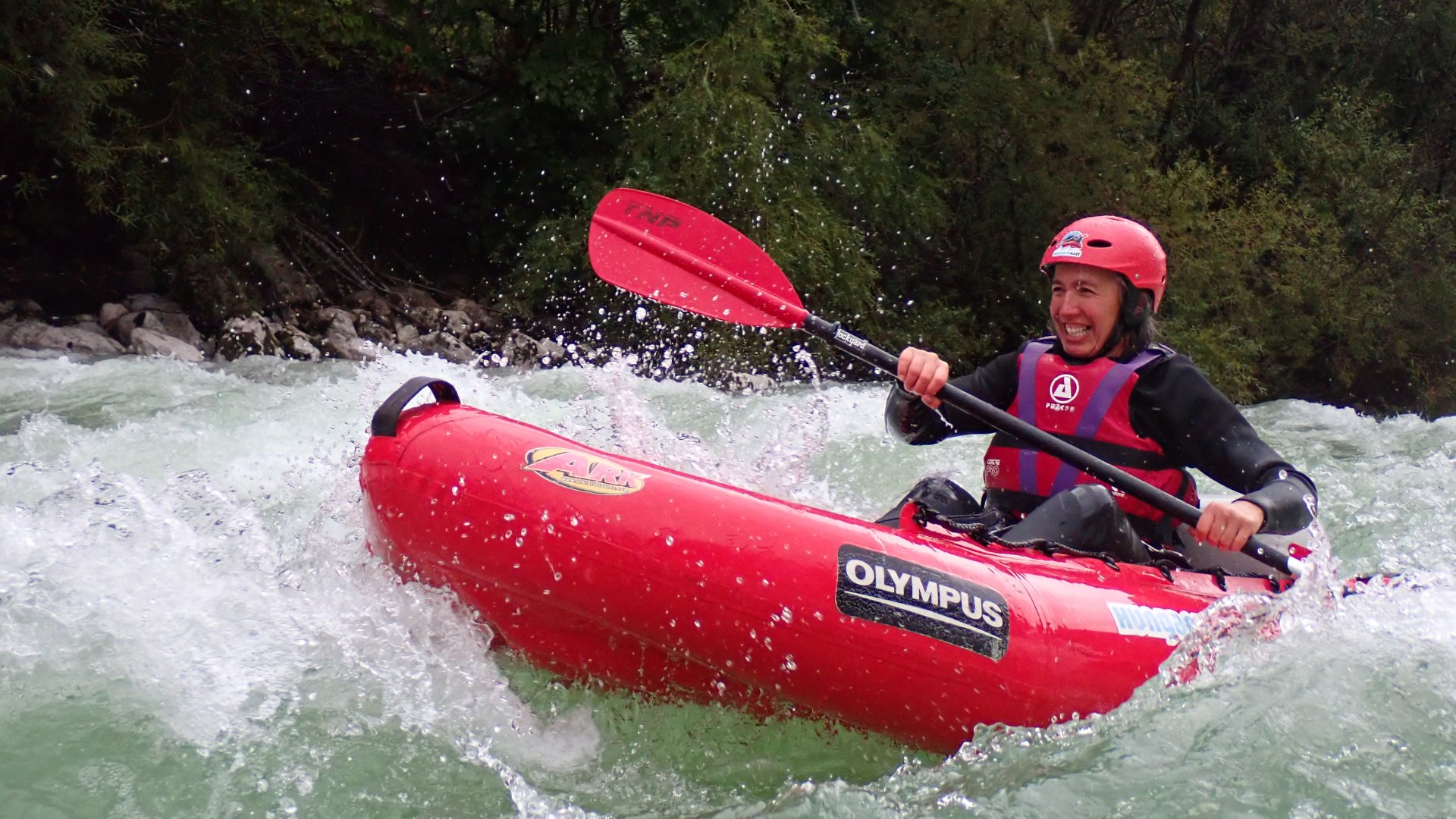
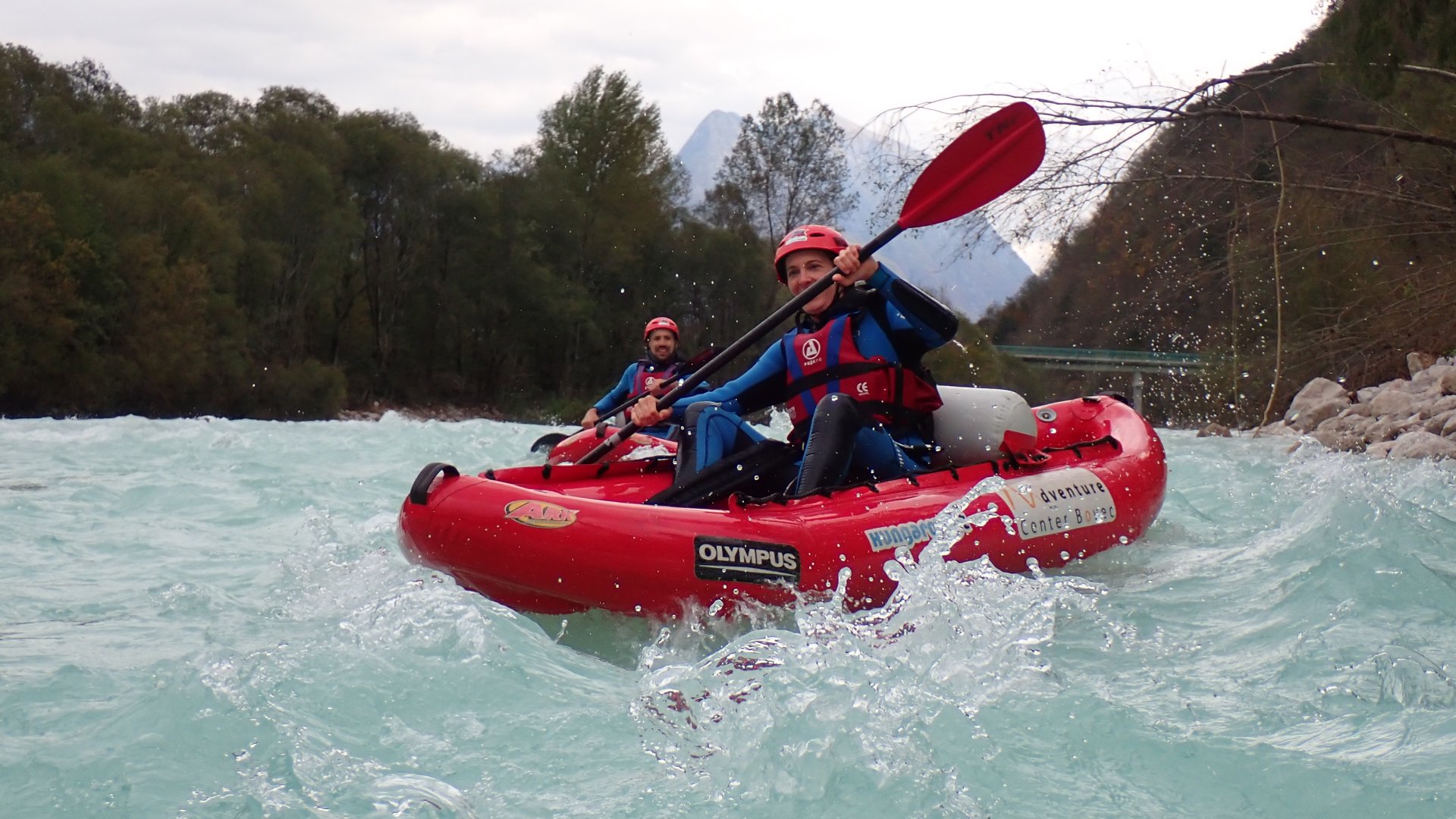
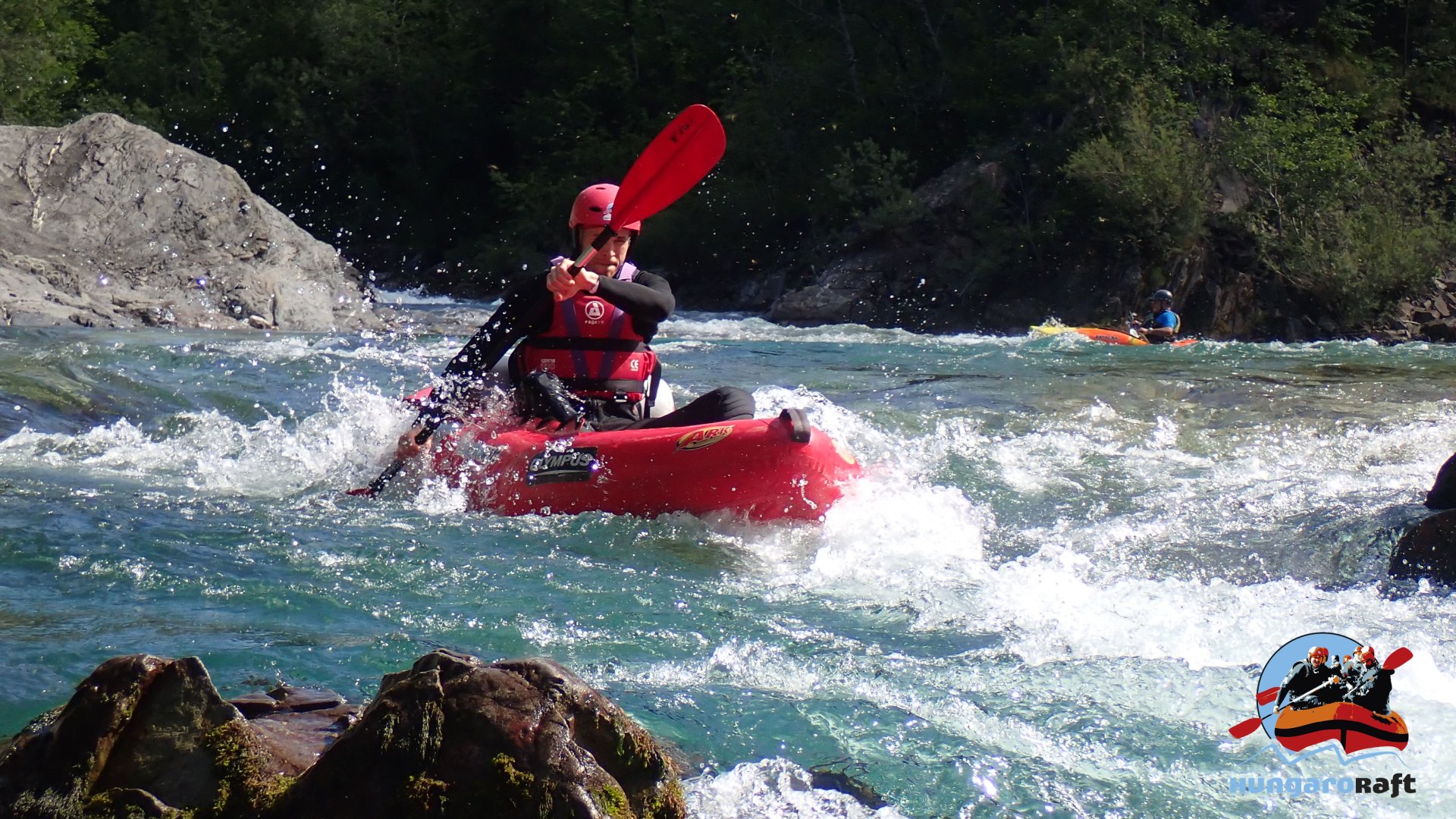
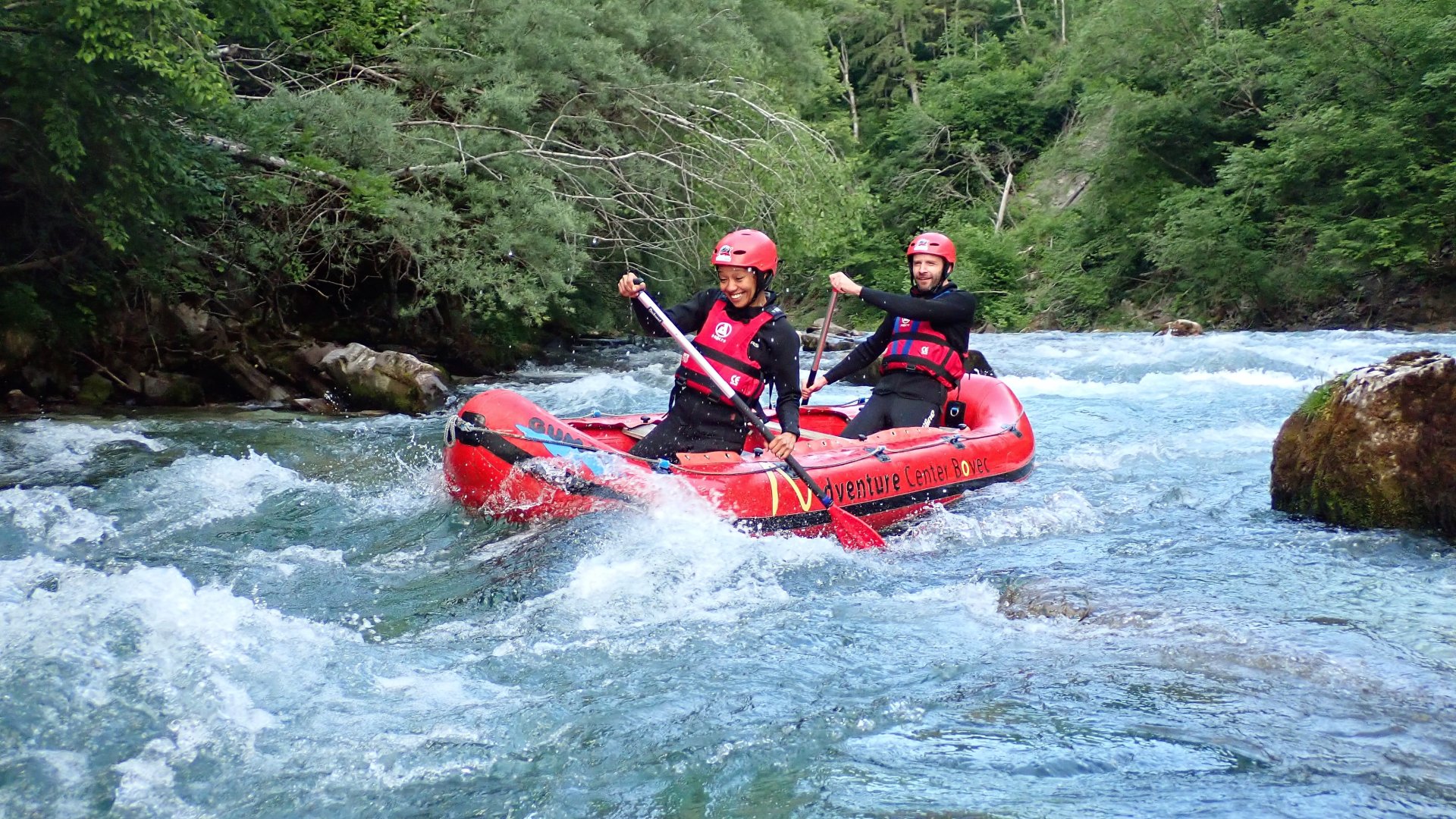
What makes the programme special is that HungaroRaft uses inflatable white-water kayaks that are more stable and easier to control than classic rigid kayaks. This means that even those with no previous white-water kayaking background can confidently try it if they would like to experience what it feels like to move more independently on the river.
What is white-water kayaking?
White-water kayaking is an active water programme where you travel down the river in a smaller kayak and get a much more direct connection with the water than during rafting. You steer the kayak, you react to the current, the waves and the bends, while the tour guides help you move safely.
This is how the white-water kayak tour works in brief
1. Arrival at the HungaroRaft base in Bovec
The tour starts at the HungaroRaft base in Bovec. We meet here, take care of the necessary administration, and you receive a short briefing about how the programme will run. It is worth arriving at least 15 minutes before the agreed time so that there is enough time to get ready and collect your equipment.
2. Collecting equipment and transfer to the river
Every participant receives the necessary equipment: neoprene suit, neoprene shoes, helmet and life jacket. After this, the group sets off by transfer to the river. According to the existing page, the journey to the river takes about 10 minutes.
3. Getting dressed and safety instruction
On the riverbank, you get changed, and then the tour guides give safety, accident-prevention and technical instruction. You learn the basic paddle strokes, steering, signals, and what to pay attention to in the current.
4. Kayaking on the Soča River
Then the main part of the tour begins: approximately 1.5 hours of kayaking on the Soča. The programme takes place on easy–medium, class I–III white water, and the exact section is chosen according to the current water level, the group’s preparedness and the safety conditions.
5. Return to the base
At the end of the kayaking, you return by transfer to the HungaroRaft base. The return journey takes about 20 minutes. At the base, you can change clothes, relax, and if photos were taken, you can view them in the online album.
What does the price include?
The participation fee includes:
- guided white-water kayak tour on the Soča;
- experienced instructors / tour guides;
- stable inflatable white-water kayak;
- paddle;
- neoprene suit;
- neoprene shoes;
- helmet;
- life jacket;
- safety, accident-prevention and technical instruction;
- transfer between the base and the river;
We capture your memories
We also capture the best moments of the tour in professional photos. During the programme, the tour guides take pictures with OM System Tough cameras, so you do not need to risk your own phone or camera on the water.
You can view the pictures in an online album after the tour, and you only decide to purchase them if you would like to keep them. The photo package costs 24 €.
Who is white-water kayaking a good choice for?
We recommend white-water kayaking for those who want a more active, more personal and sportier water experience than classic rafting. It is a good choice if you have already tried rafting and now want to experience what it feels like to move more independently on the river. It can also be a good programme if you already have flat-water kayaking experience but have not yet tried yourself on white water.
Can beginners enjoy it too?
Yes, HungaroRaft’s white-water kayak tour is accessible for beginners if you can swim, are in good physical and mental condition, and are open to learning. No previous white-water kayaking experience is required, because at the beginning of the programme you receive safety and technical instruction.
The stable inflatable kayaks help a lot in making the first experience about success rather than fear of capsizing. The goal is not to complete the Soča as a professional kayaker, but to discover, within a guided and safe framework, what it feels like to move more independently on white water.
The tour is also accessible for beginners, but it is important that you like water, can swim, and are not afraid if the kayak moves under you or water splashes around you. The programme starts from age 12, so it is also a good choice for sportier young people, active couples, groups of friends and adventurous adults.
Especially recommended for
- those who enjoyed rafting but now want something more;
- beginner white-water kayakers;
- flat-water kayakers who would like to try white water;
- active couples;
- sporty groups of friends;
- water-confident young people over 12;
- those who would like to move more independently on the Soča.
Who do we not recommend it for?
We do not recommend this tour for those looking for a completely passive water programme, those who cannot swim, panic in water, or do not want to steer a kayak independently. White-water kayaking is an easy–medium tour, but it requires active attention, cooperation and basic physical stamina.
If you are arriving with family, younger children or more cautious participants, Family White-water Paddling or Classic Rafting may be a better choice. But if you are drawn to a more independent, sportier water experience, white-water kayaking can be a much more exciting next step.
Important information and conditions
White-water kayaking on the Soča is an easy–medium difficulty, guided kayaking programme. It is not designed for extreme athletes, but it is a more active and more independent experience than classic rafting. You steer the kayak, so attention, swimming ability and following the guides’ instructions are important.
What does class I–III white water mean?
Class I–III white water means easy–medium difficulty. Class I sections are calmer and easy to follow, class II sections may already include smaller waves and stronger current situations, while class III sections require more active attention and more precise steering.
In white-water kayaking, this means that the tour is not extreme, but it is not passive either. In the kayak, you work on steering, so it is important that you pay attention to the instructors, use the movements you have learned, and feel comfortable in a water environment.
Participation conditions:
- Swimming ability: This is white-water paddling, so basic water confidence is required. The life jacket keeps everyone afloat, but it is important that you do not panic in the water.
- Age limit 12+: Under the age of 18, parental supervision or parental consent is required to take part in the tour.
- Weight limit: Due to the standard sizing of the safety equipment, the maximum weight limit is 110 kg. If you are close to this, please let us know in advance.
- Health: Participation in the tour requires a sober state, free from intoxication. It is not possible to take part in the tour under the influence of alcohol or mind-altering substances.
- Physical condition: You do not need to be an athlete, but basic mobility and cooperation are required. The tour is not recommended in the case of serious cardiovascular or musculoskeletal problems or recent injuries.
- Safety: Before getting on the water, every participant receives a safety briefing. During the tour, the instructions of the tour guide must always be followed.
- Weather and water level: The programme can also take place in rain, but the route or departure may change depending on the current water level and safety considerations.
- River usage fee: A separate river usage fee is payable on site on the Soča River (3–21 €/person). The amount may depend on the current section and water level.
- Exclusive condition of participation: signing the liability waiver.
- Insurance: Travel insurance extended to cover extreme sports is recommended!
What should you prepare for before white-water kayaking?
Prepare for an active, wet and sporty programme. The full tour takes about 3 hours, including arrival, administration, collecting equipment, transfer, getting dressed, safety instruction, approximately 1.5 hours on the river and the return as well.
You do not need to arrive with your own kayaking equipment, because we provide the necessary technical gear. You only need to bring a few basic items so that changing before and after the tour is comfortable.
What should you bring?
Swimsuit or swimming trunks, towel, dry change of clothes and a bag for your clothes. If necessary, do not forget your own medication, and bring cash or a bank card for extra expenses.
What should you not take onto the water?
Phone, valuable jewellery, unsecured glasses, high-value items. You can leave these in a safe place before the tour. If you wear glasses, it is worth securing them with a strap. For contact lenses, it is recommended to bring spare lenses or glasses as well.
When should you arrive?
At least 15 minutes before the agreed time, because there is administration, equipment distribution and group organisation.
What should you expect physically?
This is not passive boating: you need to paddle, pay attention and cooperate. It is best if participants arrive rested and in good general condition.
Weather and water level
The Soča is a cold alpine river, and the programme may change depending on water level and safety conditions. However, rafting is also an experience in the rain, since you will get wet on the water anyway. In cooler weather, the appropriate neoprene equipment helps keep you comfortable.
What do we provide for participants?
- Stable inflatable white-water kayak
- Paddle
- Neoprene suit
- Neoprene shoes
- Helmet
- Life jacket
- Transfer between the base and the river
- Safety briefing
- Technical instruction
- Experienced, qualified tour guiding / instructor supervision
- Organised programme structure